






-
Lithuania, Songs Echo in the Baltic Forests
Lithuania, Songs Echo in the Baltic Forests

The Republic of Lithuania, a country on the Baltic Sea coast, is where the Nagoya-raised diplomat Chiune Sugihara issued his “Visas for Life” to Jewish refugees. With this special relationship in mind, the Nagoya City Museum signed an agreement on mutual cooperation with the National Museum of Lithuania (Lietuvos nacionalinis muziejus) last August. This exhibition, held with the full cooperation of the National Museum, introduces the country’s history and culture through colorful traditional costumes and crafts featuring enigmatic designs. Take this opportunity to experience the vibrant culture of a people who cherish nature and adore song.
Prologue: A Land of Forests and Songs
The Lithuanian capital of Vilnius boasts lush, birdsong-filled forests next to a historic and beautiful townscape designated a UNESCO World Heritage site. At the Lithuanian Song Celebration held once every four years, choirs from all over the country gather in a suburban park surrounded by spacious woodlands, filling the air with gorgeous song. With footage of the Lithuanian Song Celebration and photographs of Lithuanian landscapes, this exhibition begins with a brief look at the nation’s verdant forests, its rich history, and the lives of the people who call it home.
Chapter I: Living with Forests
The lives of the Lithuanian people have long been intertwined with the bounty of the forests, and their reverence for nature has been passed down through the ages. Lithuania was the last country in Europe to adopt Christianity, and customs of nature worship remained deeply ingrained even after the Catholic faith took root. This Chapter focusing on natural motifs and materials explores how people have lived alongside the woodlands by examining artifacts from archaeological sites, everyday tools and toys, and sacred statues from shrines.
Amber bead necklace
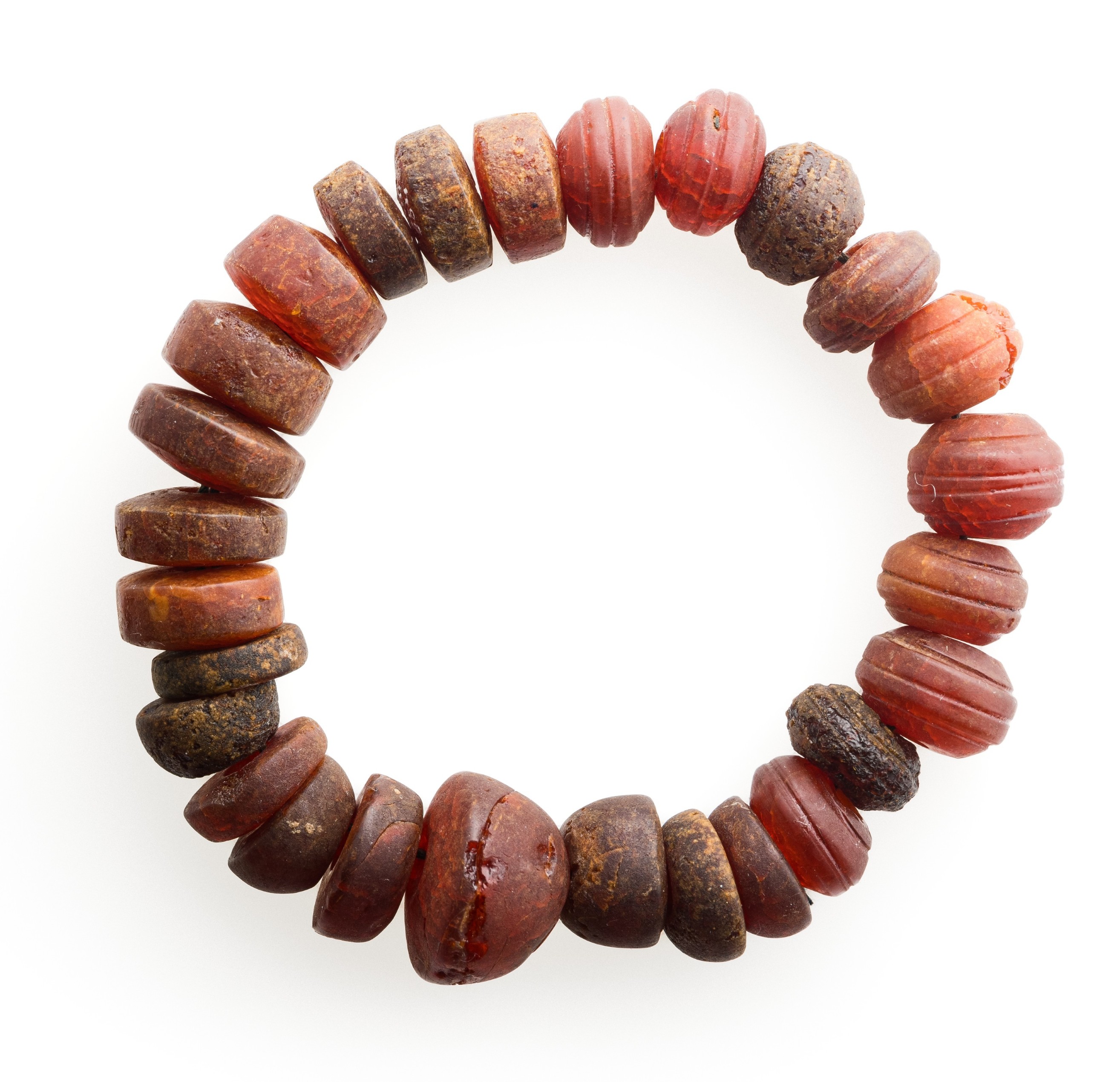
5th–6th century
Owned by National Museum of Lithuania
Amber necklaces should be understood not only as decoration, but also as markers of social status. In the 5th–6th centuries, they appear in great abundance: long necklaces made entirely of amber or combined with glass beads became widespread. The Balts adopted bead forms that were fashionable across Europe. These luxurious, chest-covering necklaces signified a woman’s high status, while amber itself, associated with the sun and life force, also carried protective and symbolic meaning.
Towel holder

1938
Owned by National Museum of Lithuania
Together with the towel, it hung in a prominent place on the wall in the main room, near the table, serving as a decorative element. These racks not only showcased the hosts’ taste and craftsmanship but also imbued the home with a sense of light and sacredness.
Towel holders were among the most artistic wooden crafts. Lithuanians used the beauty of nature—plants, flowers, and birds—to decorate them. The ornaments were highlighted by painting them in various colours.
Distaff
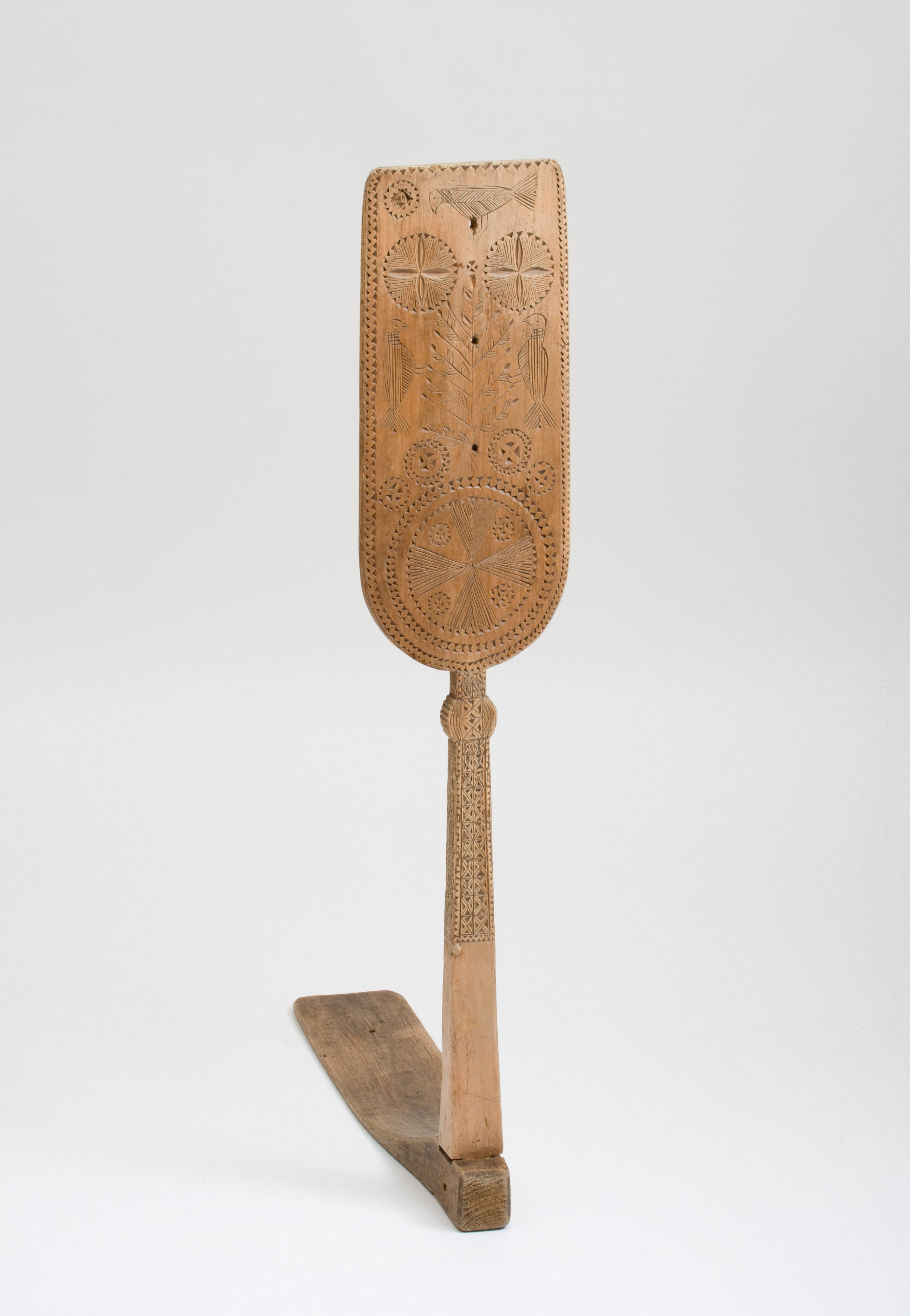
Mid-19th century
Owned by National Museum of Lithuania
The surface of this distaff is carved with segmented stars. At the centre of the composition is a tree with branches and leaves, interpreted as the World Tree or Tree of Life, connecting the three realms: heaven, earth, and the underworld. The birds perched on the tree serve as intermediaries between earth and sky. In folk belief, birds were sometimes associated with fertility, the fate of young women, and future marriages.
The ornateness and variety of Lithuanian spindles were shaped by the tradition of gift-giving: a young man would often present a spindle to a girl he liked as a sign of his feelings and serious intentions. Distaffs were also given by brothers to sisters and by parents to daughters. For this reason, they were cherished, preserved, and passed down from generation to generation.
Chapter II: Singing, Dancing, Celebrating
Songs, the sounds of musical instruments, dances, and vivid folk costumes are all essential parts of Lithuanian celebrations. As with everyday household items, designs inspired by the natural world are frequently incorporated into the traditional costumes and instruments. Chapter 2 introduces Lithuanian festivals like the Lithuanian Song Celebration, as well as unique annual events that blend nature worship with Christian beliefs. It also presents examples of musical instruments and ethnic costumes used in these celebrations.
Aukštaitija kankles
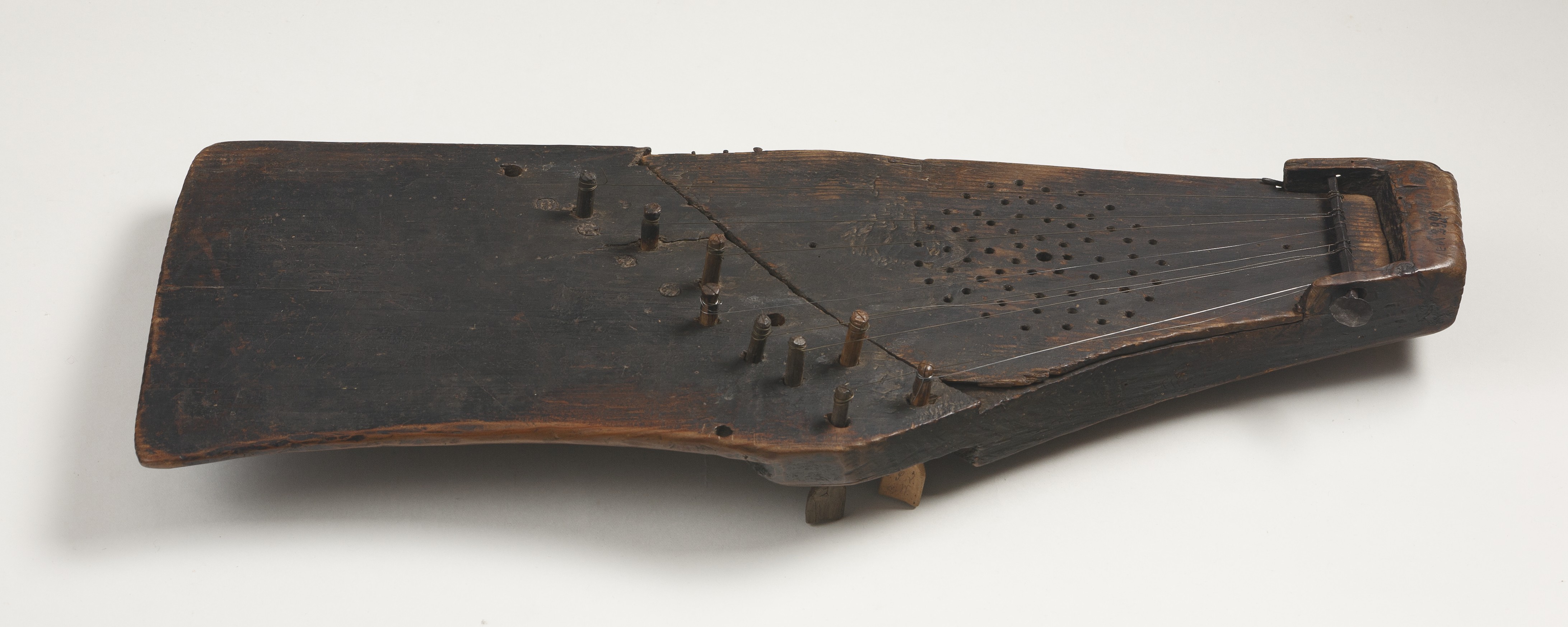
Late 19th century
Owned by National Museum of Lithuania
This kanklės from north-eastern Aukštaitija is the most archaic example of the instrument in the LNM collection. It is made of spruce wood: the carved, lute-shaped body is higher and wider at the front, the pegs are wooden, and the soundboard has many resonance holes. Such kanklės were used to play sutartinės in the Biržai, Kupiškis, and Rokiškis regions.
Festive woman’s costume of Dzūkija

21th century (Original: 19th century)
Woven in the Textile Restoration Workshops of the National Museum of Lithuania
Owned by National Museum of Lithuania
The traditional festive costume of the Dzūkija region is distinguished by its subtle elegance, contrasting color combinations, and delicate patterns. The ensemble consists of a white linen blouse embroidered with openwork, and a blue skirt trimmed with red stripes and dotted with white spots. Worn underneath are woollen or linen petticoats. Tied over the skirt is a finely checked apron, the bottom of which features a band of embroidered patterns, with the edge trimmed with store-bought braid. The bodice is made of jacquard fabric. An important detail of the costume is the embroidered sash.
Dzūkija sashes are among the most intricate and ornate. Young girls adorned their heads with wreaths, while women wore caps or scarves. The costume is complemented by coral, amber, or glass beads.
Sash
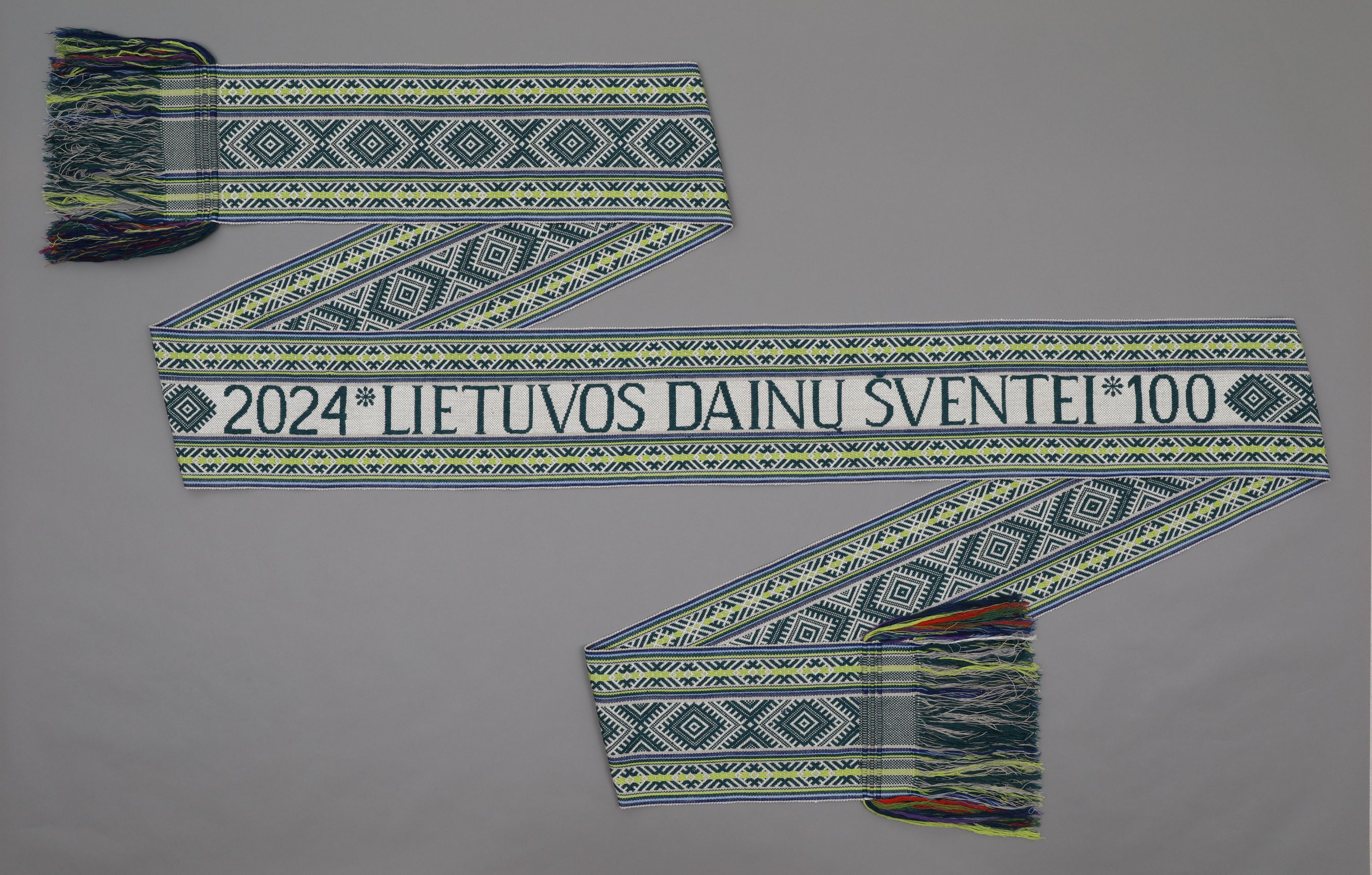
2024
Woven in the Textile Restoration Workshops of the National Museum of Lithuania
Owned by National Museum of Lithuania
This impressive commemorative sash was created to mark the centennial of the first Lithuanian Song Festival, held in 1924 (1924–2024), embodying the festival’s motto, May the Forest Be Green. The sash’s design combines traditional geometric patterns with the woven inscription 2024 * LITHUANIAN SONG FESTIVAL * 100. The patterns were created based on the designs of authentic sashes preserved in the museum’s collections. The sash was ceremoniously carried in the parade of participants at the jubilee song festival.
Chapter III: Fighting for Freedom
As a nation caught between larger powers, Lithuania has fought a series of arduous struggles for freedom and independence throughout its history. These conflicts have included battles between the Grand Duchy of Lithuania and the Teutonic Order during the Middle Ages and a resistance movement against rule by the Russian Empire that began in the late 18th century. Lithuania experienced Soviet occupation in the 20th century and declared the restoration of its independence in 1990. Here we consider how the values of the Lithuanian people, who cherish freedom and democracy, have been fostered amid a turbulent and complex history.
Excavated artifacts from a burial pit XI, man’s grave No. 3

13th century
Owned by National Museum of Lithuania
The remains of three wealthy warriors were buried in a mass grave pit. Alongside them were found six drinking horns, weapons, jewellery, horse equipment, and other grave goods. This is a distinctive feature of 13th–14th-century burials in pagan Lithuania – collective graves, likely containing those who died during raids or battles. It is believed that the soldiers who fell in the Battle of Durbe in 1260 may have been buried here.
Winged helmet
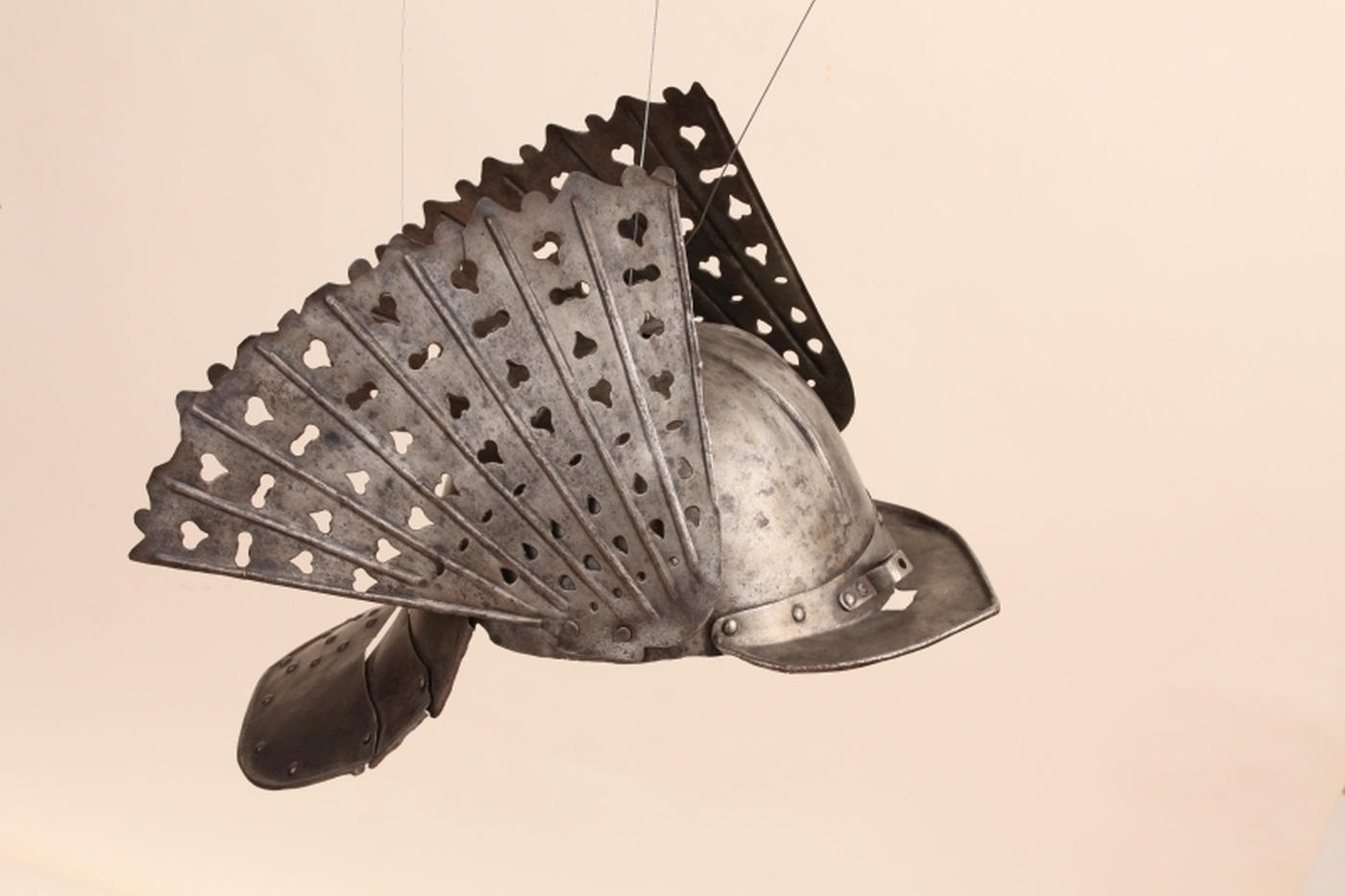
17th–18th century
Owned by National Museum of Lithuania
This type of helmet was used by hussar cavalry in the Polish–Lithuanian Commonwealth. Its form was related to Western European Pappenheimer helmets, but local examples developed distinctive features of their own. Hussar helmets appeared in several versions, including ones with a finial, a high comb, or fan-shaped wings attached to the skull. The openwork wings of this example give it a particularly striking and decorative appearance, combining military function with ceremonial display.
Political caricature on a pole
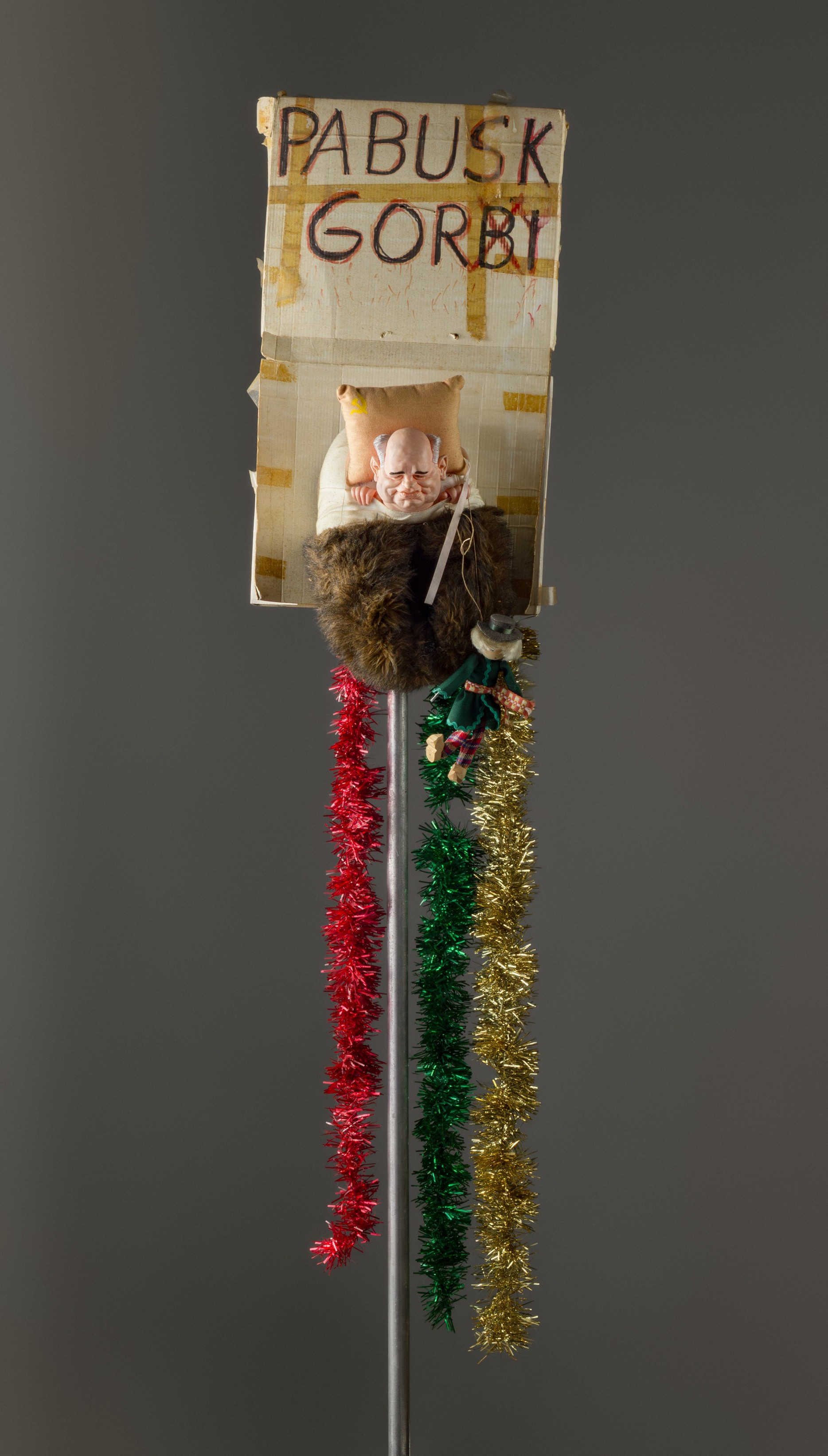
20th century
Owned by National Museum of Lithuania
Images of George Bush and Mikhail Gorbachev, accompanied by symbolic props and the slogans “Wake up George” and “Pabusk, Gorbi,” reflect the political language of protest in Lithuania at the time of the struggle for independence. By addressing two of the most visible world leaders of the period, the object expressed both disappointment and hope: a call for the international community to respond to Soviet violence and to recognise Lithuania’s cause.
Epilogue: The Present and Future of Lithuania
It has been 36 years since Lithuania declared the restoration of its independence in 1990. Since then, democracy has taken hold, and the economy has significantly grown. This last section offers a view of Lithuania today through several topics: a food culture that savors the bounty of forests; basketball, the nation’s favorite sport; cutting-edge laser technologies; efforts to pass on history and culture to coming generations; and the memory of Chiune Sugihara and the bonds between Lithuania and Japan. What does the future hold for this nation shaped by its rich and unique history?

-
9:30~17:00(入場16:30まで)






名古屋市博物館
〒467-0806 名古屋市瑞穂区瑞穂通1-27-1
電話 052-853-2655 ファックス 052-853-3636
名古屋市博物館のオフィシャルホームページは、名古屋市博物館によって管理・運営されています。
本ページの内容を無断で複製・改変等することは固くお断りいたします。
(C) Nagoya City Museum. All rights reserved.